Every child in South Africa has the right to basic education – a right guaranteed by the Constitution and vital for breaking cycles of poverty and inequality. But for thousands of learners, that right is undermined by unsafe classrooms, crumbling infrastructure, and a lack of water, sanitation, and electricity.
To help turn data and advocacy into accountability, the Centre for Child Law (CCL) commissioned Cornerstone Economic Research to produce a four-part research series, Improving Government Accountability to Advance the Right to Basic Education.
The series examines a decade of efforts to secure safe school infrastructure – through litigation, advocacy, public finance, and programme delivery – and highlights what still needs to change to ensure every learner can study in safety and dignity.
1. Unequal access and litigation to force change
The first paper traces how apartheid’s legacy of inequality continues to shape South Africa’s schools. While white learners once benefited from well-resourced institutions, black children were left in underfunded and unsafe environments – a pattern that persists in many rural provinces today.
In 2010, parents and communities, represented by the Centre for Child Law and the Legal Resources Centre, launched the landmark “Mud Schools case” in the Eastern Cape. The case forced government to commit R8.2 billion to replace unsafe schools across the country. This litigation not only improved infrastructure but also transformed how civil society uses the courts to demand accountability.
➡ Key finding: Litigation is powerful for forcing commitments, but sustained monitoring and implementation are essential to turn those commitments into real change.
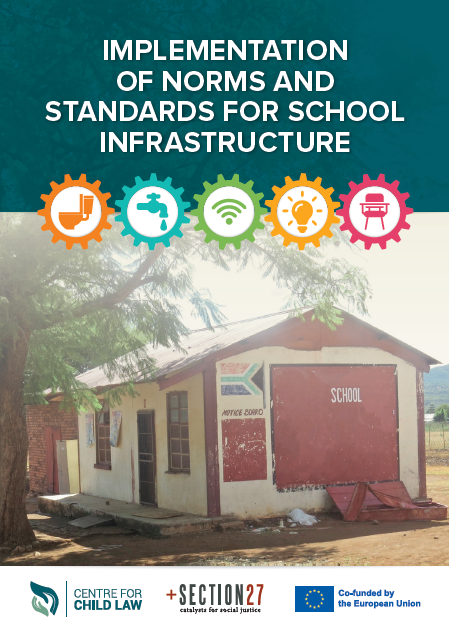
2. Norms and standards for school infrastrucutre
Persistent advocacy from organisations such as Equal Education led to the adoption of Minimum Norms and Standards for School Infrastructure in 2013. These regulations set binding deadlines to eradicate unsafe schools and guarantee access to water, sanitation, and electricity.
However, in 2024 government removed the deadlines, weakening the enforceability of these obligations. Civil society has warned that this move risks undoing a decade of progress.
The research shows important improvements – schools without sanitation have been eliminated, and those without any water supply have decreased sharply since 2013 – yet many schools still depend on pit latrines, and unreliable water and power remain widespread.
➡ Key finding: Clear deadlines and transparent monitoring are critical. Without them, the constitutional promise of safe schools loses urgency.
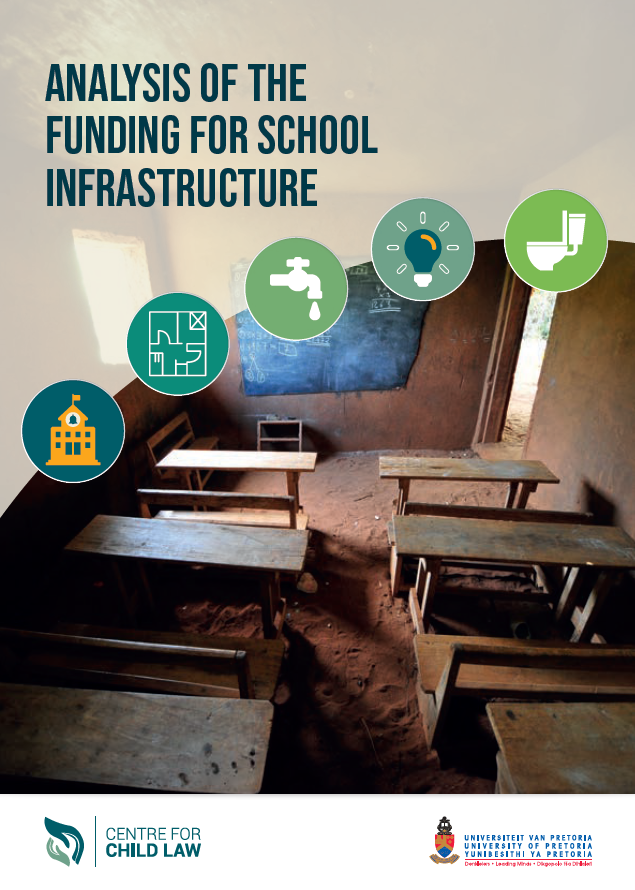
3. Funding for school infrastructure
Our analysis unpacked how infrastructure is financed through a mix of national conditional grants and provincial budgets — chiefly the Education Infrastructure Grant (EIG) and the School Infrastructure Backlogs Grant (SIBG).
Both the Mud Schools and Norms and Standards litigation influenced national budget increases for school infrastructure. But inconsistent provincial choices and weak spending capacity mean funding still doesn’t always translate into safe schools.
➡ Key finding: Financial allocations have grown — but equitable spending, capacity, and oversight are what truly deliver results.
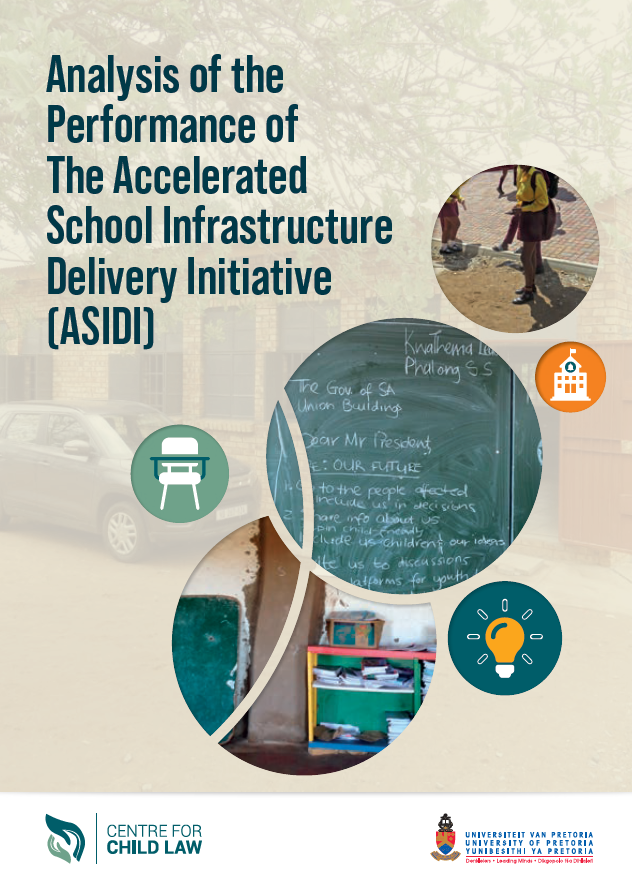
4. The Accelerated Schools Infrastructure Delivery Initiative (ASIDI)
Established in 2011 in response to the Mud Schools case, ASIDI was designed to eliminate unsafe school buildings and provide essential services. By 2020, the programme had completed 246 new schools and improved water, sanitation, and electricity access in hundreds more.
Yet progress has been slowed by corruption, poor governance, and underspending. Some years saw billions of rands in unspent allocations while learners continued to attend unsafe schools. The paper also questions whether the indirect nature of the SIBG, which bypasses provinces, undermines accountability between national and provincial governments.
➡ Key finding: ASIDI achieved measurable impact, but systemic weaknesses, austerity cuts, and governance failures prevented it from meeting its full potential.
Across all four papers, Cornerstone’s analysis reveals a consistent message:
- Litigation and advocacy drive progress, but political will determines whether reforms are realised.
- Funding matters, but good governance matters more — underspending and corruption continue to limit impact.
- Provincial accountability is uneven; leadership at this level can accelerate or stall delivery.
- Civil society oversight is indispensable, keeping children’s rights visible and government honest.
Conclusion
Thirty years into democracy, too many children still learn in unsafe schools. This is not a question of resources or capacity alone – it is a question of political accountability.
Through this four-part series, Cornerstone Economic Research and the Centre for Child Law document the power of evidence-based advocacy: showing how research, finance, and litigation together can drive systemic change.
The goal is simple but urgent:
No child in South Africa should ever learn in conditions that threaten their safety or dignity.